

Blog / Article

How to Build a Healthcare Growth System That Actually Works

Shan Serran
Shan Serran
February 25, 2026

You're watching your marketing budget shrink while your patient acquisition costs climb. Healthcare marketing budgets dropped to $7.6 million in 2023, down from $12.5 million in 2019. Meanwhile, Google Ads costs for healthcare keywords jumped 34% since last year.

The gap keeps widening.

Most healthcare organizations respond by running more campaigns. Better ads. Smarter targeting. More spend on channels that used to work.

But campaigns fade. Systems compound.

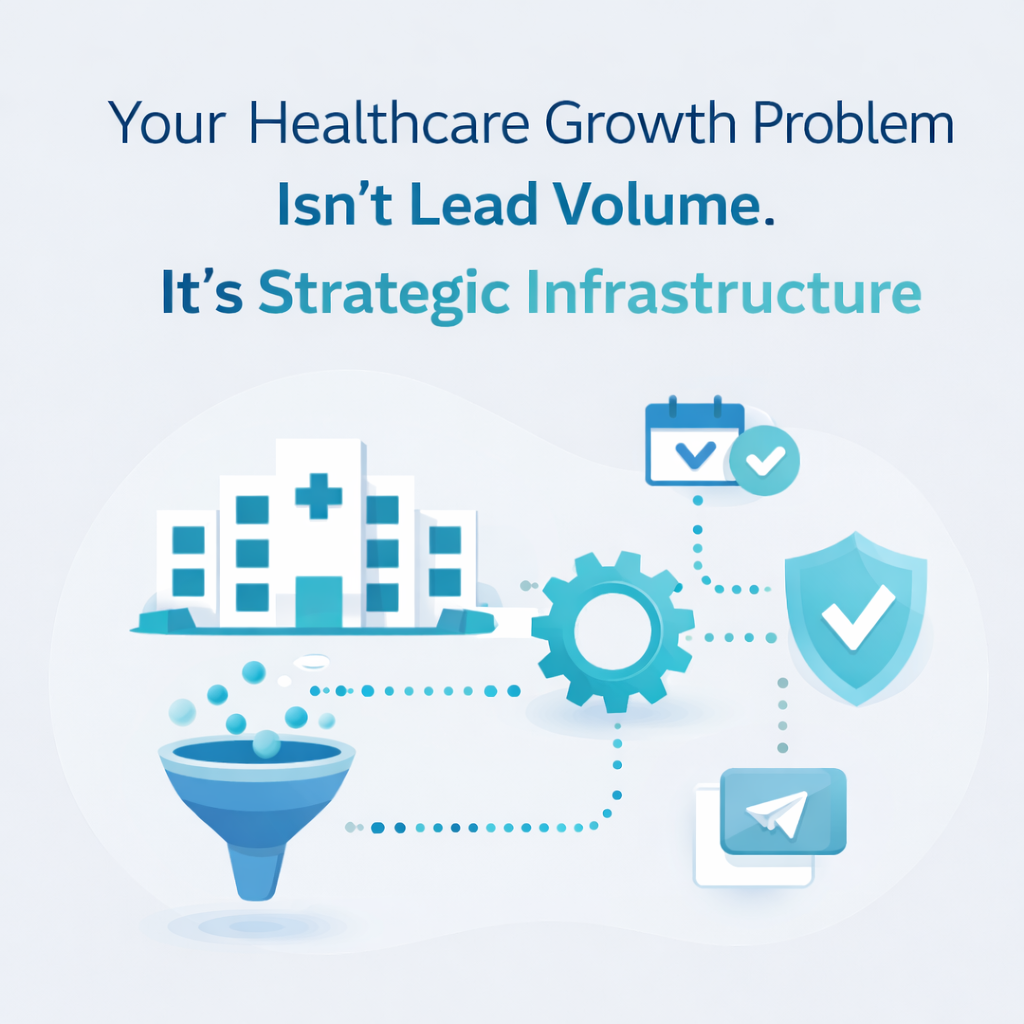
This guide walks you through building a healthcare growth system that works in regulated environments—one that reduces your reliance on campaigns and creates predictable demand.
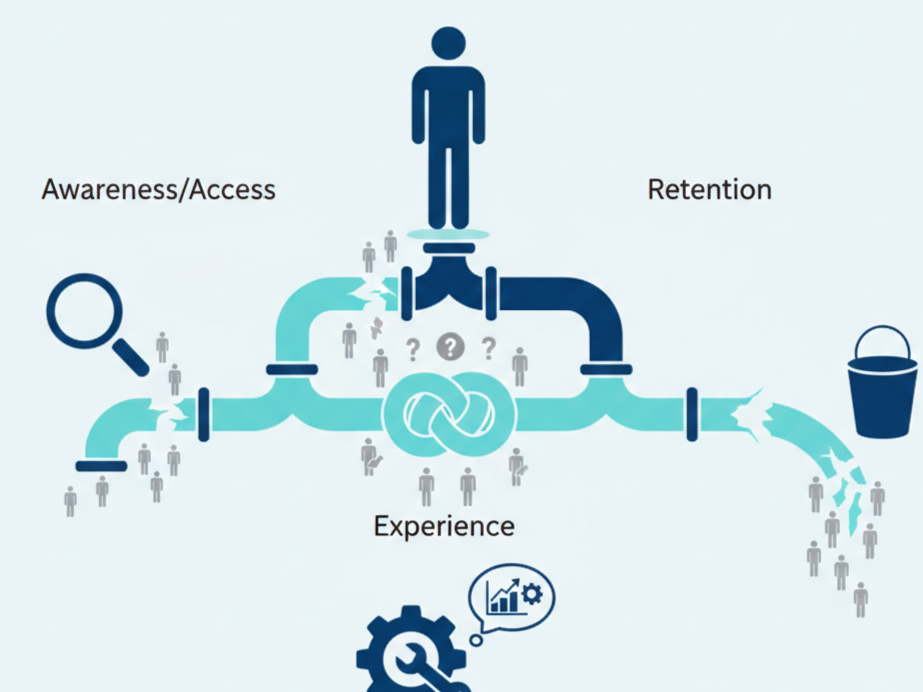
Step 1: Diagnose Where Your Growth Actually Breaks

Before you build anything, you need to know where your current approach fails. Most healthcare organizations assume they have a marketing problem when they actually have a systems problem.

Start by mapping your patient journey from first contact to repeat visit.

Ask yourself:

  • Where do potential patients drop off?
  • What friction exists between inquiry and appointment?
  • How many patients return after their first visit?
  • What happens between appointments that causes them to leave?

The answers reveal whether your problem is awareness, access, experience, or retention.

Here's what the data shows:

The average healthcare organization has a 45% growth rate but a 48% churn rate. You're losing patients faster than you're acquiring them.

That's not a marketing problem.

When you map the journey, you'll likely find gaps in:

  • How quickly you respond to inquiries
  • How easy it is to schedule appointments
  • What happens after the first visit
  • How you communicate between appointments
  • Why patients don't return

These are system issues. Marketing can't fix them.

Step 2: Fix Your Foundation Before You Scale

You can't scale a broken system. Every new patient you acquire through marketing hits the same friction points that caused previous patients to leave.

Focus on these operational elements first:

Response Time

How fast do you respond to inquiries? If someone fills out a form or calls your office, how long until they hear back?

In healthcare, speed signals care. Delays signal indifference.

Set a standard: all inquiries get a response within one business hour. If you can't meet that, you're not ready to scale acquisition.

Scheduling Friction

Can people book appointments without calling? Can they see availability in real time? Do they have to navigate phone trees or wait on hold?

Every barrier between inquiry and appointment costs you patients.

Audit your scheduling process. Remove steps. Reduce wait times. Make it easier than your competitors.

First Visit Experience

What happens when a new patient walks through your door? Do they wait? Do they fill out redundant paperwork? Do they feel rushed?

The first visit determines whether they return. New patients have only a 5-20% chance of returning compared to 60-70% for established patients.

Map every touchpoint in the first visit. Identify where patients feel friction. Fix it before you spend another dollar on marketing.

Follow-Up Systems

What happens after the appointment? Do you send a follow-up message? Do you check in before the next scheduled visit? Do you have a system to re-engage patients who miss appointments?

Most healthcare organizations focus on acquisition and ignore retention. It costs 5-25 times more to acquire a new patient than to retain an existing one.

Build automated follow-up sequences. Create re-engagement campaigns for inactive patients. Make retention as systematic as acquisition.

Step 3: Build Demand Systems That Work in Regulated Environments

Once your foundation is solid, you can build demand systems that feed it.

In healthcare, demand generation looks different than other industries. You're operating under compliance constraints. You're targeting people in vulnerable moments. You're competing for trust before you compete for attention.

Here's how to approach it:

Create Educational Content That Builds Trust

People research healthcare decisions extensively before they take action. They want to understand their options, compare providers, and feel confident in their choice.

Your content should answer the questions they're already asking:

  • What are the treatment options for [condition]?
  • How do I know if I need [service]?
  • What should I expect during [procedure]?
  • How do I choose the right [provider type]?

Write clearly. Avoid medical jargon. Focus on helping people make informed decisions—not on selling your services.

When you build trust through education, conversion becomes easier.

Optimize for Local Search

Most healthcare decisions start with location. People search for providers near them.

Make sure you show up:

  • Claim and optimize your Google Business Profile
  • Keep your NAP (name, address, phone) consistent across directories
  • Collect and respond to patient reviews
  • Create location-specific content for the communities you serve

Local search isn't glamorous. It works.

Use Paid Channels Strategically

Paid advertising in healthcare requires precision. Healthcare keyword costs have risen 34% since 2023. You can't afford to waste spend on unqualified traffic.

Focus on:

  • High-intent keywords tied to specific services
  • Geographic targeting to match your service area
  • Conversion tracking that measures appointments, not clicks
  • Landing pages designed for compliance and clarity

Paid channels work when they're part of a system—not when they're your entire strategy.

Build Referral Loops

Your best patients refer other patients. Make it easy for them.

Create a simple referral process:

  • Ask satisfied patients if they know anyone who might benefit from your services
  • Provide shareable resources they can pass along
  • Follow up when referrals come in
  • Thank patients who refer others

Referrals cost nothing and convert better than any marketing channel.

Step 4: Measure What Actually Matters

Most healthcare organizations measure the wrong things.

Impressions don't matter. Clicks don't matter. Even website traffic doesn't matter if it doesn't convert.

Focus on these metrics:

  • Qualified inquiries: How many people contact you who are a good fit for your services?
  • Inquiry-to-appointment rate: What percentage of inquiries become scheduled appointments?
  • Show rate: What percentage of scheduled appointments actually show up?
  • First-to-second visit rate: What percentage of new patients return?
  • Patient lifetime value: How much revenue does the average patient generate over time?
  • Patient acquisition cost: How much do you spend to acquire each new patient?

These metrics tell you whether your system works.

More than half of hospital leaders don't have a formal process for assessing ROI when buying digital health solutions. They invest without measuring what matters.

You can't improve what you don't measure.

Step 5: Optimize Based on Real Data

Once you're measuring the right things, you can optimize systematically.

Look at your conversion funnel. Where do people drop off? What's causing the friction?

Common optimization opportunities:

  • If inquiry volume is low, improve your visibility and messaging
  • If inquiry-to-appointment conversion is low, reduce scheduling friction
  • If show rates are low, improve appointment reminders and pre-visit communication
  • If first-to-second visit rates are low, fix the first visit experience
  • If patient lifetime value is low, build better retention systems

Small improvements compound. A 10% increase in show rate plus a 10% increase in return rate creates significant growth without spending more on acquisition.

One healthcare system reduced claim rejections by 50%, saving approximately $37 million. They didn't get there through better marketing. They got there through better systems.

Step 6: Scale What Works

Once you've built a system that converts inquiries into patients and patients into repeat patients, you can scale acquisition with confidence.

Scaling means:

  • Increasing spend on channels that deliver qualified inquiries at acceptable cost
  • Expanding into new service areas or patient populations
  • Building additional content that targets new search intent
  • Creating more referral opportunities

But you only scale after you've fixed the foundation.

Scaling a broken system just breaks it faster.

Why This Approach Works in Healthcare

Healthcare growth is different because healthcare decisions are different.

People don't choose providers the way they choose software or consumer products. They're making decisions that affect their health, their family, their quality of life.

They need trust before they need speed.

When you build systems that prioritize trust, reduce friction, and deliver consistent experiences, growth becomes predictable.

Infrastructure investments in healthcare provide positive returns over the long term. Marketing campaigns fade. Infrastructure compounds.

The organizations that win in healthcare aren't the ones with the biggest marketing budgets. They're the ones with the best systems.

What to Do Next

Start with diagnosis. Map your patient journey. Find where it breaks.

Fix the foundation before you scale acquisition. Build retention systems before you invest in awareness.

Measure what matters. Optimize based on real data. Scale what works.

You don't need a bigger marketing budget. You need a better system.

If you want help building a growth system that works in your regulated environment, we can walk through your specific situation. No pressure. Just clarity.

Get a free consultation to see where your growth system breaks and what to fix first.

About the Author

Shan Serran

With experience of over 10 years in Digital Marketing, Shan has been helping businesses with SEO, SEM, and Social Media. He founded Veewz with the vision of providing transparency in the delivery of digital marketing services and better options for businesses of all sizes and domains. When he’s not working, Shan loves to spend time with his family, watch movies and support his favorite team the San Francisco Giants.

Related Article

How to Build a Healthcare Growth System That Actually Works

Shan Serran
February 25, 2026
|

You're watching your marketing budget shrink while your patient acquisition costs climb. Healthcare marketing budgets dropped to $7.6 million in 2023, down from $12.5 million in 2019. Meanwhile, Google Ads costs for healthcare keywords jumped 34% since last year.

The gap keeps widening.

Most healthcare organizations respond by running more campaigns. Better ads. Smarter targeting. More spend on channels that used to work.

But campaigns fade. Systems compound.

This guide walks you through building a healthcare growth system that works in regulated environments—one that reduces your reliance on campaigns and creates predictable demand.

Step 1: Diagnose Where Your Growth Actually Breaks

Before you build anything, you need to know where your current approach fails. Most healthcare organizations assume they have a marketing problem when they actually have a systems problem.

Start by mapping your patient journey from first contact to repeat visit.

Ask yourself:

  • Where do potential patients drop off?
  • What friction exists between inquiry and appointment?
  • How many patients return after their first visit?
  • What happens between appointments that causes them to leave?

The answers reveal whether your problem is awareness, access, experience, or retention.

Here's what the data shows:

The average healthcare organization has a 45% growth rate but a 48% churn rate. You're losing patients faster than you're acquiring them.

That's not a marketing problem.

When you map the journey, you'll likely find gaps in:

  • How quickly you respond to inquiries
  • How easy it is to schedule appointments
  • What happens after the first visit
  • How you communicate between appointments
  • Why patients don't return

These are system issues. Marketing can't fix them.

Step 2: Fix Your Foundation Before You Scale

You can't scale a broken system. Every new patient you acquire through marketing hits the same friction points that caused previous patients to leave.

Focus on these operational elements first:

Response Time

How fast do you respond to inquiries? If someone fills out a form or calls your office, how long until they hear back?

In healthcare, speed signals care. Delays signal indifference.

Set a standard: all inquiries get a response within one business hour. If you can't meet that, you're not ready to scale acquisition.

Scheduling Friction

Can people book appointments without calling? Can they see availability in real time? Do they have to navigate phone trees or wait on hold?

Every barrier between inquiry and appointment costs you patients.

Audit your scheduling process. Remove steps. Reduce wait times. Make it easier than your competitors.

First Visit Experience

What happens when a new patient walks through your door? Do they wait? Do they fill out redundant paperwork? Do they feel rushed?

The first visit determines whether they return. New patients have only a 5-20% chance of returning compared to 60-70% for established patients.

Map every touchpoint in the first visit. Identify where patients feel friction. Fix it before you spend another dollar on marketing.

Follow-Up Systems

What happens after the appointment? Do you send a follow-up message? Do you check in before the next scheduled visit? Do you have a system to re-engage patients who miss appointments?

Most healthcare organizations focus on acquisition and ignore retention. It costs 5-25 times more to acquire a new patient than to retain an existing one.

Build automated follow-up sequences. Create re-engagement campaigns for inactive patients. Make retention as systematic as acquisition.

Step 3: Build Demand Systems That Work in Regulated Environments

Once your foundation is solid, you can build demand systems that feed it.

In healthcare, demand generation looks different than other industries. You're operating under compliance constraints. You're targeting people in vulnerable moments. You're competing for trust before you compete for attention.

Here's how to approach it:

Create Educational Content That Builds Trust

People research healthcare decisions extensively before they take action. They want to understand their options, compare providers, and feel confident in their choice.

Your content should answer the questions they're already asking:

  • What are the treatment options for [condition]?
  • How do I know if I need [service]?
  • What should I expect during [procedure]?
  • How do I choose the right [provider type]?

Write clearly. Avoid medical jargon. Focus on helping people make informed decisions—not on selling your services.

When you build trust through education, conversion becomes easier.

Optimize for Local Search

Most healthcare decisions start with location. People search for providers near them.

Make sure you show up:

  • Claim and optimize your Google Business Profile
  • Keep your NAP (name, address, phone) consistent across directories
  • Collect and respond to patient reviews
  • Create location-specific content for the communities you serve

Local search isn't glamorous. It works.

Use Paid Channels Strategically

Paid advertising in healthcare requires precision. Healthcare keyword costs have risen 34% since 2023. You can't afford to waste spend on unqualified traffic.

Focus on:

  • High-intent keywords tied to specific services
  • Geographic targeting to match your service area
  • Conversion tracking that measures appointments, not clicks
  • Landing pages designed for compliance and clarity

Paid channels work when they're part of a system—not when they're your entire strategy.

Build Referral Loops

Your best patients refer other patients. Make it easy for them.

Create a simple referral process:

  • Ask satisfied patients if they know anyone who might benefit from your services
  • Provide shareable resources they can pass along
  • Follow up when referrals come in
  • Thank patients who refer others

Referrals cost nothing and convert better than any marketing channel.

Step 4: Measure What Actually Matters

Most healthcare organizations measure the wrong things.

Impressions don't matter. Clicks don't matter. Even website traffic doesn't matter if it doesn't convert.

Focus on these metrics:

  • Qualified inquiries: How many people contact you who are a good fit for your services?
  • Inquiry-to-appointment rate: What percentage of inquiries become scheduled appointments?
  • Show rate: What percentage of scheduled appointments actually show up?
  • First-to-second visit rate: What percentage of new patients return?
  • Patient lifetime value: How much revenue does the average patient generate over time?
  • Patient acquisition cost: How much do you spend to acquire each new patient?

These metrics tell you whether your system works.

More than half of hospital leaders don't have a formal process for assessing ROI when buying digital health solutions. They invest without measuring what matters.

You can't improve what you don't measure.

Step 5: Optimize Based on Real Data

Once you're measuring the right things, you can optimize systematically.

Look at your conversion funnel. Where do people drop off? What's causing the friction?

Common optimization opportunities:

  • If inquiry volume is low, improve your visibility and messaging
  • If inquiry-to-appointment conversion is low, reduce scheduling friction
  • If show rates are low, improve appointment reminders and pre-visit communication
  • If first-to-second visit rates are low, fix the first visit experience
  • If patient lifetime value is low, build better retention systems

Small improvements compound. A 10% increase in show rate plus a 10% increase in return rate creates significant growth without spending more on acquisition.

One healthcare system reduced claim rejections by 50%, saving approximately $37 million. They didn't get there through better marketing. They got there through better systems.

Step 6: Scale What Works

Once you've built a system that converts inquiries into patients and patients into repeat patients, you can scale acquisition with confidence.

Scaling means:

  • Increasing spend on channels that deliver qualified inquiries at acceptable cost
  • Expanding into new service areas or patient populations
  • Building additional content that targets new search intent
  • Creating more referral opportunities

But you only scale after you've fixed the foundation.

Scaling a broken system just breaks it faster.

Why This Approach Works in Healthcare

Healthcare growth is different because healthcare decisions are different.

People don't choose providers the way they choose software or consumer products. They're making decisions that affect their health, their family, their quality of life.

They need trust before they need speed.

When you build systems that prioritize trust, reduce friction, and deliver consistent experiences, growth becomes predictable.

Infrastructure investments in healthcare provide positive returns over the long term. Marketing campaigns fade. Infrastructure compounds.

The organizations that win in healthcare aren't the ones with the biggest marketing budgets. They're the ones with the best systems.

What to Do Next

Start with diagnosis. Map your patient journey. Find where it breaks.

Fix the foundation before you scale acquisition. Build retention systems before you invest in awareness.

Measure what matters. Optimize based on real data. Scale what works.

You don't need a bigger marketing budget. You need a better system.

If you want help building a growth system that works in your regulated environment, we can walk through your specific situation. No pressure. Just clarity.

Get a free consultation to see where your growth system breaks and what to fix first.

Author Bio

Shan Serran

With experience of over 10 years in Digital Marketing, Shan has been helping businesses with SEO, SEM, and Social Media. He founded Veewz with the vision of providing transparency in the delivery of digital marketing services and better options for businesses of all sizes and domains. When he’s not working, Shan loves to spend time with his family, watch movies and support his favorite team San Francisco Giants.

Do not sell my info