
Blog / Article

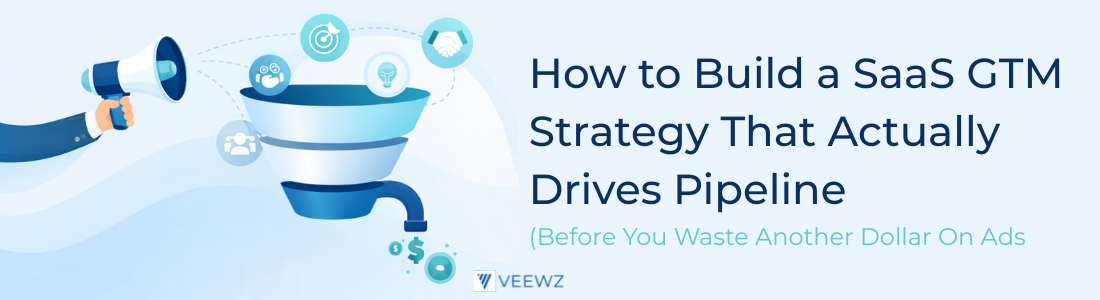
How to Build a SaaS GTM Strategy That Actually Drives Pipeline (Before You Waste Another Dollar on Ads)

Shan Serran
Shan Serran
January 5, 2026

You're three weeks into Q1. The board wants growth. Your team wants budget. And you're staring at a dashboard that shows traffic but no pipeline.

Here's what happened: You launched campaigns before you built the foundation.

42% of SaaS startups fail because there's no market need for their product. That's not a product problem. That's a go-to-market problem. And it shows up in your funnel before it shows up in your revenue report.

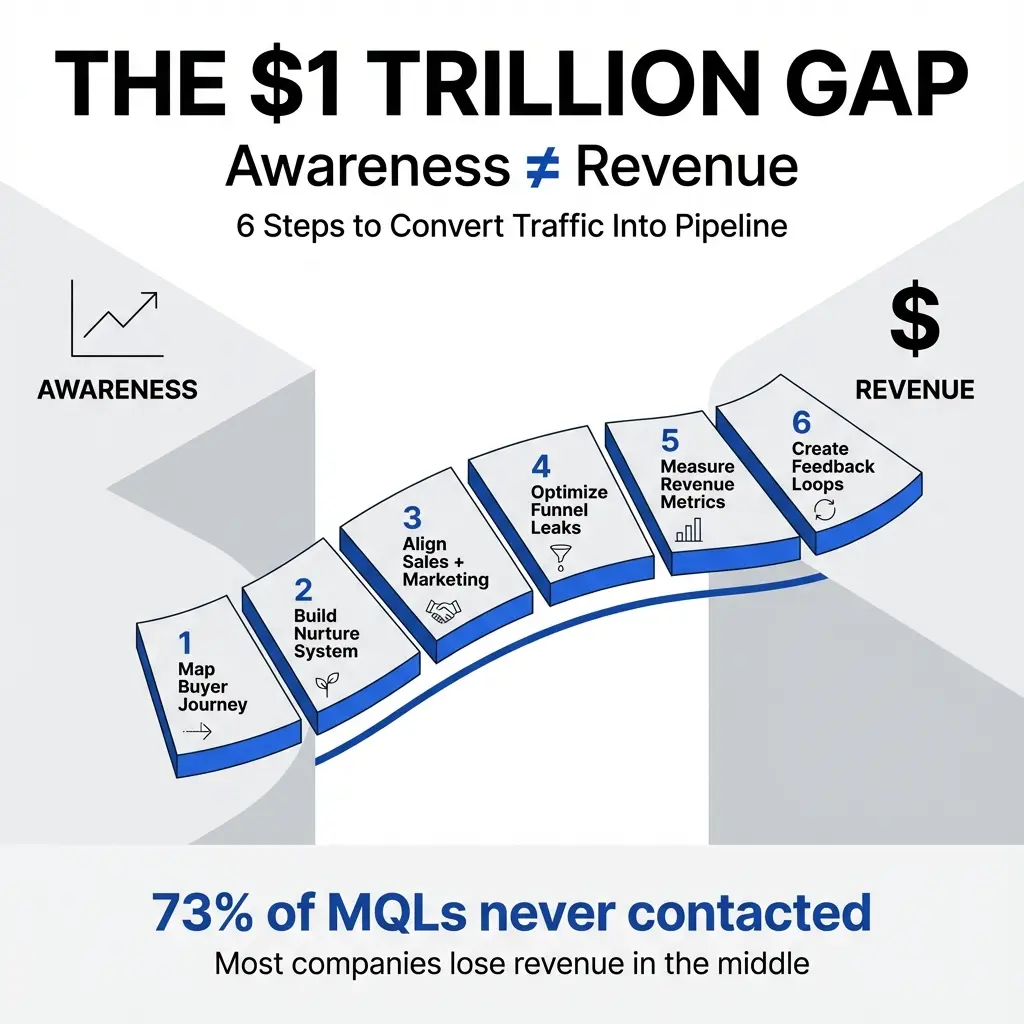
This guide walks you through how to build a GTM strategy that creates clarity across your funnel, aligns your team around the right buyers, and turns your demand generation into actual closed deals.

No fluff. Just the framework.

Why Most SaaS Companies Skip GTM Strategy (And Pay for It Later)

The pressure to grow fast makes teams reactive.

You hire a demand gen manager. You spin up Google Ads. You launch an ABM campaign. You're doing all the right activities, but nothing connects.

Here's the reality: 85% of businesses say their GTM strategy directly drives revenue and business growth. The companies that win aren't just running campaigns. They're operating from a clear understanding of who they're selling to, what problem they're solving, and how buyers move through their funnel.

The companies that lose? They're guessing.

Harvard Business School found a 95% yearly failure rate for new products that launch without a precisely developed GTM strategy. That's not a small margin of error. That's a systemic problem.

And it gets worse when you look at execution. Only 55% of product launches happen on schedule, according to Gartner. The average delay? Four months or more. That's four months of recurring revenue you're not capturing because your GTM wasn't ready.

What a Real GTM Strategy Actually Includes

A GTM strategy isn't a marketing plan. It's the blueprint for how your entire company brings a product to market and scales it.

Here's what you need to define:

1. Target Market and Ideal Customer Profile (ICP)

You need to know exactly who you're selling to. Not "mid-market SaaS companies." That's too broad.

Your ICP should answer:

  • What industry and company size?
  • What revenue range?
  • What's their current tech stack?
  • What problem are they actively trying to solve?
  • Who makes the buying decision?

The 2025 B2B SaaS funnel data shows MQL to SQL as the key bottleneck, with average conversion rates between 15-21%. If your ICP isn't tight, you're generating leads that will never convert to qualified opportunities.

2. Value Proposition and Positioning

Your value proposition needs to be specific enough that a buyer can immediately understand what you do and why it matters to them.

Answer these questions:

  • What outcome do you deliver?
  • What makes your approach different?
  • Why should someone choose you over a competitor or the status quo?

Positioning isn't about being clever. It's about being clear.

3. Buyer Journey and Funnel Stages

Map out how buyers move from awareness to decision. For each stage, define:

  • What questions are they asking?
  • What content or conversations do they need?
  • What triggers them to move to the next stage?
  • Where do deals typically stall?

For small-to-midsize SaaS companies ($10M-$100M ARR), the typical funnel shows visitor-to-lead conversion of 1.4%, lead-to-MQL at 41%, MQL-to-SQL at 39%, SQL-to-opportunity at 42%, and opportunity-to-close at 39%. That creates an overall lead-to-customer conversion rate of about 2.7%.

If you don't know where your funnel breaks, you can't fix it.

4. Channel Strategy

Where will you reach your buyers? Not every channel works for every audience.

Define:

  • Which channels will you use for awareness? (SEO, paid social, content, partnerships)
  • Which channels will you use for conversion? (email, demo requests, sales outreach)
  • Which channels will you use for retention? (product-led growth, customer marketing)

Marketers waste up to 21% of budgets due to bad data and inefficient targeting. Your channel strategy needs to be based on where your buyers actually are, not where you think they should be.

5. Pricing and Packaging

How you price and package your product directly impacts your ability to scale.

Consider:

  • What pricing model matches your buyer's expectations? (per user, per feature, flat rate)
  • How does your pricing compare to competitors?
  • What's your expansion path? (upsells, add-ons, premium tiers)

An incorrect GTM strategy can mean years of slow growth because of wrong pricing, poor channel selection, and unrealistic sales processes.

6. Sales Process and Enablement

Your sales team needs to know how to move buyers from qualified lead to closed deal.

Define:

  • What's your sales cycle length?
  • What objections come up most often?
  • What resources does your sales team need? (case studies, ROI calculators, demo scripts)
  • How do marketing and sales hand off leads?

Deals get stuck in the sales process when there's no alignment between what marketing promises and what sales delivers.

How to Build Your GTM Strategy in 4 Phases

Here's the process we use with SaaS clients to build a GTM strategy that actually works.

Phase 1: Research and Validation (Weeks 1-2)

Start by gathering data on your current state.

Audit your existing funnel:

  • Pull conversion data for every stage (visitor to lead, lead to MQL, MQL to SQL, SQL to opportunity, opportunity to close)
  • Identify where the biggest drop-offs happen
  • Calculate your customer acquisition cost (CAC) and lifetime value (LTV)

Interview your best customers:

  • What problem were they trying to solve when they found you?
  • What other solutions did they consider?
  • What convinced them to buy?
  • What would make them churn?

Analyze your competitors:

  • How are they positioning themselves?
  • What channels are they using?
  • What's their pricing structure?

This phase gives you the foundation. You're not guessing anymore. You're working from real data.

Phase 2: Strategy Development (Weeks 3-4)

Now you build the actual strategy.

Define your ICP:

  • Create 2-3 detailed buyer personas
  • Include firmographics (company size, industry, revenue) and psychographics (pain points, goals, objections)
  • Prioritize which persona you'll target first

Craft your positioning:

  • Write a clear value proposition (one sentence that explains what you do and why it matters)
  • Develop your key messaging pillars (3-5 core messages that support your value prop)
  • Create differentiation points (what makes you different from competitors)

Map your buyer journey:

  • Define each stage of your funnel
  • Identify what buyers need at each stage
  • Determine what success looks like at each transition point

Select your channels:

  • Choose 2-3 primary channels based on where your buyers are
  • Define success metrics for each channel
  • Allocate budget based on expected ROI

A 5-point lift in any mid-funnel stage can increase total closed revenue by 12-18%. Small improvements in your strategy compound across the entire funnel.

Phase 3: Execution Planning (Weeks 5-6)

Strategy without execution is just theory.

Build your content roadmap:

  • Create a 90-day content calendar aligned to your buyer journey
  • Identify gaps in your current content library
  • Prioritize high-impact assets (case studies, product demos, comparison guides)

Set up your tech stack:

  • Ensure your CRM, marketing automation, and analytics tools are properly connected
  • Define lead scoring criteria
  • Create automated workflows for lead nurturing

Align sales and marketing:

  • Define what constitutes a qualified lead
  • Create a service level agreement (SLA) between teams
  • Establish regular sync meetings to review pipeline health

Set your KPIs:

  • Define success metrics for each funnel stage
  • Establish baseline performance
  • Set realistic targets for improvement

Phase 4: Launch and Optimize (Weeks 7+)

Now you execute and iterate.

Launch your campaigns:

  • Start with your highest-priority channel
  • Run controlled tests (A/B test messaging, targeting, creative)
  • Track performance against your KPIs

Monitor your funnel:

  • Review conversion rates weekly
  • Identify bottlenecks as they emerge
  • Make incremental improvements based on data

Optimize continuously:

  • Double down on what's working
  • Cut what's not delivering ROI
  • Test new approaches in small batches

87% of SaaS companies report improved growth rates through AI-driven personalization. As you optimize, look for opportunities to use technology to improve targeting and conversion.

Common GTM Mistakes That Kill Pipeline

Even with a strategy in place, there are pitfalls that derail execution.

Mistake 1: Targeting Too Broad

When you try to sell to everyone, you end up resonating with no one.

Your messaging becomes generic. Your campaigns attract low-quality leads. Your sales team wastes time on deals that will never close.

Fix: Start narrow. You can always expand your ICP once you've proven product-market fit with a specific segment.

Mistake 2: Launching Before Your Funnel Is Ready

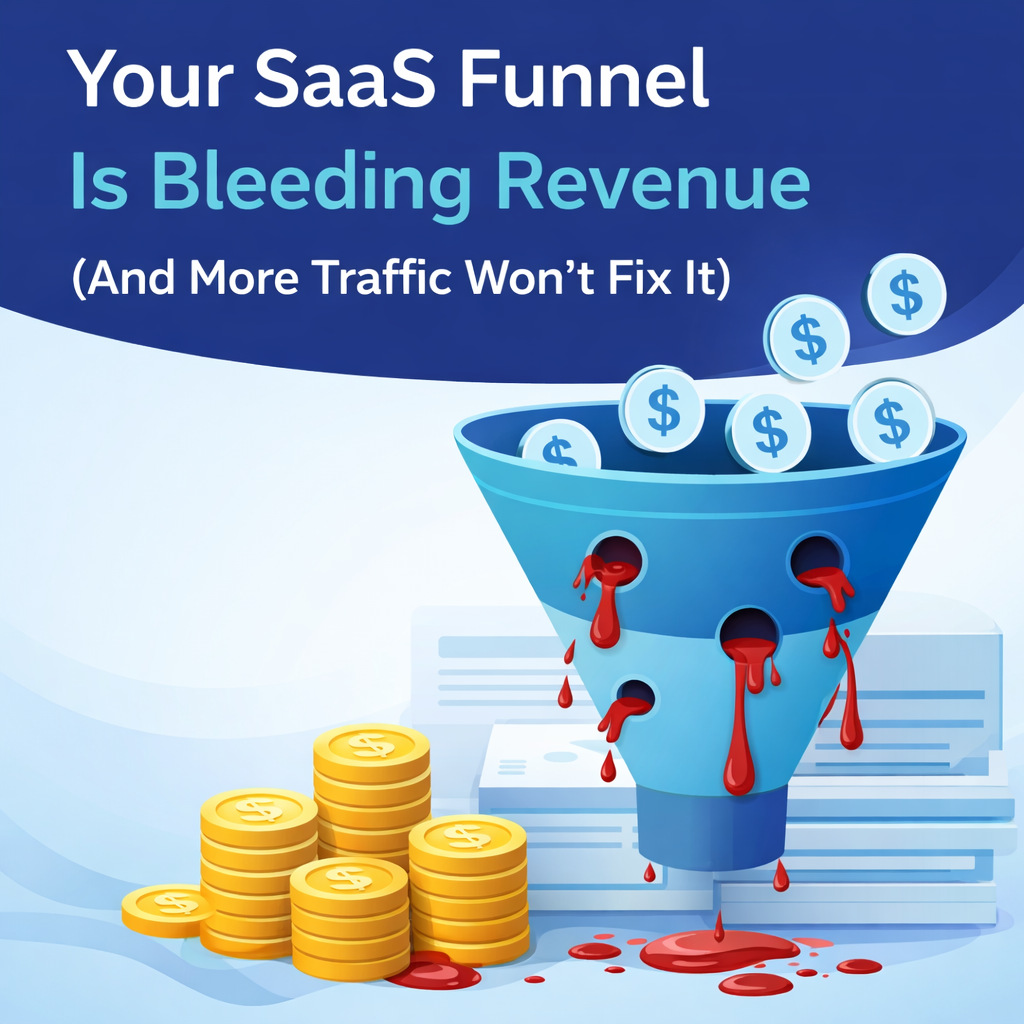
You can't drive traffic to a broken funnel and expect conversions.

If your website doesn't clearly communicate your value proposition, if your demo request form is buried, if your sales team doesn't have the resources they need to close deals—your campaigns will fail.

Fix: Audit your funnel before you spend a dollar on ads. Make sure every stage is optimized for conversion.

Mistake 3: Ignoring the Data

Marketers estimate they waste 21% of their budget due to inefficient spending, inaccurate targeting, and flawed performance reporting.

If you're not tracking the right metrics, you can't optimize.

Fix: Define your KPIs upfront. Review performance weekly. Make data-driven decisions, not gut-based ones.

Mistake 4: Treating GTM as a One-Time Project

Your GTM strategy isn't something you build once and forget about.

Markets shift. Competitors evolve. Buyer behavior changes. Your strategy needs to adapt.

Fix: Review your GTM strategy quarterly. Update your ICP, messaging, and channel mix based on what's working.

What Happens When You Get GTM Right

When your GTM strategy is solid, everything else gets easier.

Your campaigns generate qualified leads. Your sales team closes deals faster. Your CAC drops. Your LTV increases. You scale with confidence instead of chaos.

The median rate of expansion for SaaS companies retreated from 17% in 2023 to 14% in 2024, with projections indicating a further decline to 12% in 2025. The companies that buck this trend are the ones that prioritize strategic clarity over reactive execution.

You don't need more traffic. You need a strategy that turns traffic into pipeline.

Start with Your Foundation, Not Your Campaigns

The biggest mistake SaaS companies make is launching campaigns before they've built the foundation.

You can't fix a broken funnel with more ads. You can't close deals without clear positioning. You can't scale without knowing who you're selling to and why they should care.

Start with your GTM strategy. Build clarity across your funnel. Align your team around the right buyers. Then launch your campaigns.

That's how you turn demand generation into actual revenue.

Need help building a GTM strategy that drives real pipeline? Book a GTM call with Veewz. We'll audit your current funnel, identify your biggest gaps, and build a roadmap to fix them.

About the Author

Shan Serran

With experience of over 10 years in Digital Marketing, Shan has been helping businesses with SEO, SEM, and Social Media. He founded Veewz with the vision of providing transparency in the delivery of digital marketing services and better options for businesses of all sizes and domains. When he’s not working, Shan loves to spend time with his family, watch movies and support his favorite team the San Francisco Giants.

Related Article

How to Build a SaaS GTM Strategy That Actually Drives Pipeline (Before You Waste Another Dollar on Ads)

Shan Serran
January 5, 2026
|

You're three weeks into Q1. The board wants growth. Your team wants budget. And you're staring at a dashboard that shows traffic but no pipeline.

Here's what happened: You launched campaigns before you built the foundation.

42% of SaaS startups fail because there's no market need for their product. That's not a product problem. That's a go-to-market problem. And it shows up in your funnel before it shows up in your revenue report.

This guide walks you through how to build a GTM strategy that creates clarity across your funnel, aligns your team around the right buyers, and turns your demand generation into actual closed deals.

No fluff. Just the framework.

Why Most SaaS Companies Skip GTM Strategy (And Pay for It Later)

The pressure to grow fast makes teams reactive.

You hire a demand gen manager. You spin up Google Ads. You launch an ABM campaign. You're doing all the right activities, but nothing connects.

Here's the reality: 85% of businesses say their GTM strategy directly drives revenue and business growth. The companies that win aren't just running campaigns. They're operating from a clear understanding of who they're selling to, what problem they're solving, and how buyers move through their funnel.

The companies that lose? They're guessing.

Harvard Business School found a 95% yearly failure rate for new products that launch without a precisely developed GTM strategy. That's not a small margin of error. That's a systemic problem.

And it gets worse when you look at execution. Only 55% of product launches happen on schedule, according to Gartner. The average delay? Four months or more. That's four months of recurring revenue you're not capturing because your GTM wasn't ready.

What a Real GTM Strategy Actually Includes

A GTM strategy isn't a marketing plan. It's the blueprint for how your entire company brings a product to market and scales it.

Here's what you need to define:

1. Target Market and Ideal Customer Profile (ICP)

You need to know exactly who you're selling to. Not "mid-market SaaS companies." That's too broad.

Your ICP should answer:

  • What industry and company size?
  • What revenue range?
  • What's their current tech stack?
  • What problem are they actively trying to solve?
  • Who makes the buying decision?

The 2025 B2B SaaS funnel data shows MQL to SQL as the key bottleneck, with average conversion rates between 15-21%. If your ICP isn't tight, you're generating leads that will never convert to qualified opportunities.

2. Value Proposition and Positioning

Your value proposition needs to be specific enough that a buyer can immediately understand what you do and why it matters to them.

Answer these questions:

  • What outcome do you deliver?
  • What makes your approach different?
  • Why should someone choose you over a competitor or the status quo?

Positioning isn't about being clever. It's about being clear.

3. Buyer Journey and Funnel Stages

Map out how buyers move from awareness to decision. For each stage, define:

  • What questions are they asking?
  • What content or conversations do they need?
  • What triggers them to move to the next stage?
  • Where do deals typically stall?

For small-to-midsize SaaS companies ($10M-$100M ARR), the typical funnel shows visitor-to-lead conversion of 1.4%, lead-to-MQL at 41%, MQL-to-SQL at 39%, SQL-to-opportunity at 42%, and opportunity-to-close at 39%. That creates an overall lead-to-customer conversion rate of about 2.7%.

If you don't know where your funnel breaks, you can't fix it.

4. Channel Strategy

Where will you reach your buyers? Not every channel works for every audience.

Define:

  • Which channels will you use for awareness? (SEO, paid social, content, partnerships)
  • Which channels will you use for conversion? (email, demo requests, sales outreach)
  • Which channels will you use for retention? (product-led growth, customer marketing)

Marketers waste up to 21% of budgets due to bad data and inefficient targeting. Your channel strategy needs to be based on where your buyers actually are, not where you think they should be.

5. Pricing and Packaging

How you price and package your product directly impacts your ability to scale.

Consider:

  • What pricing model matches your buyer's expectations? (per user, per feature, flat rate)
  • How does your pricing compare to competitors?
  • What's your expansion path? (upsells, add-ons, premium tiers)

An incorrect GTM strategy can mean years of slow growth because of wrong pricing, poor channel selection, and unrealistic sales processes.

6. Sales Process and Enablement

Your sales team needs to know how to move buyers from qualified lead to closed deal.

Define:

  • What's your sales cycle length?
  • What objections come up most often?
  • What resources does your sales team need? (case studies, ROI calculators, demo scripts)
  • How do marketing and sales hand off leads?

Deals get stuck in the sales process when there's no alignment between what marketing promises and what sales delivers.

How to Build Your GTM Strategy in 4 Phases

Here's the process we use with SaaS clients to build a GTM strategy that actually works.

Phase 1: Research and Validation (Weeks 1-2)

Start by gathering data on your current state.

Audit your existing funnel:

  • Pull conversion data for every stage (visitor to lead, lead to MQL, MQL to SQL, SQL to opportunity, opportunity to close)
  • Identify where the biggest drop-offs happen
  • Calculate your customer acquisition cost (CAC) and lifetime value (LTV)

Interview your best customers:

  • What problem were they trying to solve when they found you?
  • What other solutions did they consider?
  • What convinced them to buy?
  • What would make them churn?

Analyze your competitors:

  • How are they positioning themselves?
  • What channels are they using?
  • What's their pricing structure?

This phase gives you the foundation. You're not guessing anymore. You're working from real data.

Phase 2: Strategy Development (Weeks 3-4)

Now you build the actual strategy.

Define your ICP:

  • Create 2-3 detailed buyer personas
  • Include firmographics (company size, industry, revenue) and psychographics (pain points, goals, objections)
  • Prioritize which persona you'll target first

Craft your positioning:

  • Write a clear value proposition (one sentence that explains what you do and why it matters)
  • Develop your key messaging pillars (3-5 core messages that support your value prop)
  • Create differentiation points (what makes you different from competitors)

Map your buyer journey:

  • Define each stage of your funnel
  • Identify what buyers need at each stage
  • Determine what success looks like at each transition point

Select your channels:

  • Choose 2-3 primary channels based on where your buyers are
  • Define success metrics for each channel
  • Allocate budget based on expected ROI

A 5-point lift in any mid-funnel stage can increase total closed revenue by 12-18%. Small improvements in your strategy compound across the entire funnel.

Phase 3: Execution Planning (Weeks 5-6)

Strategy without execution is just theory.

Build your content roadmap:

  • Create a 90-day content calendar aligned to your buyer journey
  • Identify gaps in your current content library
  • Prioritize high-impact assets (case studies, product demos, comparison guides)

Set up your tech stack:

  • Ensure your CRM, marketing automation, and analytics tools are properly connected
  • Define lead scoring criteria
  • Create automated workflows for lead nurturing

Align sales and marketing:

  • Define what constitutes a qualified lead
  • Create a service level agreement (SLA) between teams
  • Establish regular sync meetings to review pipeline health

Set your KPIs:

  • Define success metrics for each funnel stage
  • Establish baseline performance
  • Set realistic targets for improvement

Phase 4: Launch and Optimize (Weeks 7+)

Now you execute and iterate.

Launch your campaigns:

  • Start with your highest-priority channel
  • Run controlled tests (A/B test messaging, targeting, creative)
  • Track performance against your KPIs

Monitor your funnel:

  • Review conversion rates weekly
  • Identify bottlenecks as they emerge
  • Make incremental improvements based on data

Optimize continuously:

  • Double down on what's working
  • Cut what's not delivering ROI
  • Test new approaches in small batches

87% of SaaS companies report improved growth rates through AI-driven personalization. As you optimize, look for opportunities to use technology to improve targeting and conversion.

Common GTM Mistakes That Kill Pipeline

Even with a strategy in place, there are pitfalls that derail execution.

Mistake 1: Targeting Too Broad

When you try to sell to everyone, you end up resonating with no one.

Your messaging becomes generic. Your campaigns attract low-quality leads. Your sales team wastes time on deals that will never close.

Fix: Start narrow. You can always expand your ICP once you've proven product-market fit with a specific segment.

Mistake 2: Launching Before Your Funnel Is Ready

You can't drive traffic to a broken funnel and expect conversions.

If your website doesn't clearly communicate your value proposition, if your demo request form is buried, if your sales team doesn't have the resources they need to close deals—your campaigns will fail.

Fix: Audit your funnel before you spend a dollar on ads. Make sure every stage is optimized for conversion.

Mistake 3: Ignoring the Data

Marketers estimate they waste 21% of their budget due to inefficient spending, inaccurate targeting, and flawed performance reporting.

If you're not tracking the right metrics, you can't optimize.

Fix: Define your KPIs upfront. Review performance weekly. Make data-driven decisions, not gut-based ones.

Mistake 4: Treating GTM as a One-Time Project

Your GTM strategy isn't something you build once and forget about.

Markets shift. Competitors evolve. Buyer behavior changes. Your strategy needs to adapt.

Fix: Review your GTM strategy quarterly. Update your ICP, messaging, and channel mix based on what's working.

What Happens When You Get GTM Right

When your GTM strategy is solid, everything else gets easier.

Your campaigns generate qualified leads. Your sales team closes deals faster. Your CAC drops. Your LTV increases. You scale with confidence instead of chaos.

The median rate of expansion for SaaS companies retreated from 17% in 2023 to 14% in 2024, with projections indicating a further decline to 12% in 2025. The companies that buck this trend are the ones that prioritize strategic clarity over reactive execution.

You don't need more traffic. You need a strategy that turns traffic into pipeline.

Start with Your Foundation, Not Your Campaigns

The biggest mistake SaaS companies make is launching campaigns before they've built the foundation.

You can't fix a broken funnel with more ads. You can't close deals without clear positioning. You can't scale without knowing who you're selling to and why they should care.

Start with your GTM strategy. Build clarity across your funnel. Align your team around the right buyers. Then launch your campaigns.

That's how you turn demand generation into actual revenue.

Need help building a GTM strategy that drives real pipeline? Book a GTM call with Veewz. We'll audit your current funnel, identify your biggest gaps, and build a roadmap to fix them.

Author Bio

Shan Serran

With experience of over 10 years in Digital Marketing, Shan has been helping businesses with SEO, SEM, and Social Media. He founded Veewz with the vision of providing transparency in the delivery of digital marketing services and better options for businesses of all sizes and domains. When he’s not working, Shan loves to spend time with his family, watch movies and support his favorite team San Francisco Giants.

Do not sell my info