.avif)


.png)
Your pipeline stalled. Your team's burning through budget. And you're wondering if you're betting on the wrong strategy.
The tension between demand generation and growth marketing keeps coming up in board meetings, strategy sessions, and late-night Slack threads. One camp says focus on filling the funnel. The other argues you need full-lifecycle thinking.
Both sound right. Both promise results. And that's exactly the problem.
The truth is more nuanced than most marketing content admits. Because the question isn't really which approach is better. It's which one matches where your business actually is right now, and where it needs to go.
Let's break down what each approach actually does, where each one wins, and how to make the call for your team.
The Pipeline Problem Nobody Talks About
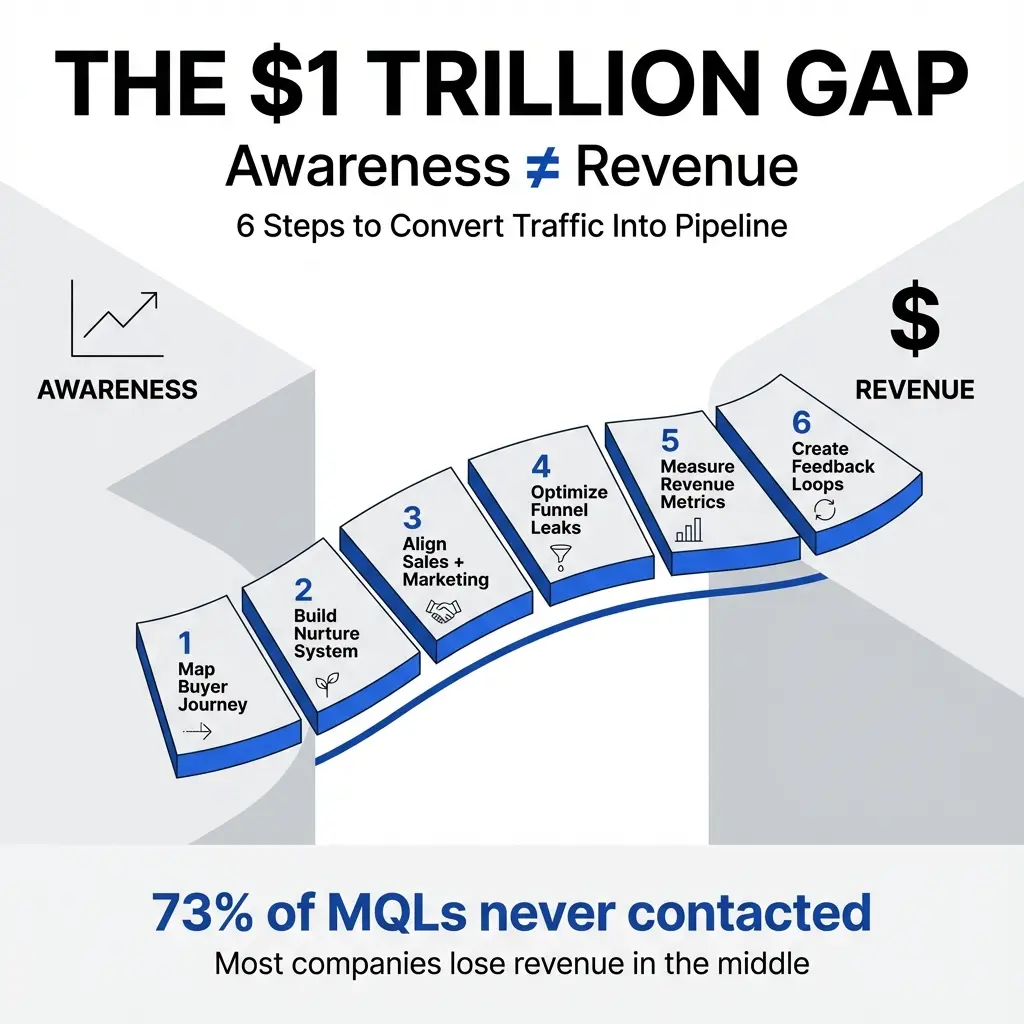
Here's what most SaaS marketing leaders won't tell you: only 14% of companies rate their pipeline-building efforts as highly effective.
That means 86% of teams are running strategies that don't quite work.
The problem isn't effort. Most marketing teams work incredibly hard. They run campaigns, optimize landing pages, A/B test everything. But activity doesn't equal outcomes.
For most SaaS companies, pipeline generation is the rate-limiting factor on growth. If new opportunities stay flat, you have a demand problem. If opportunities grow month over month, revenue follows.
Which means your marketing strategy isn't just a budget allocation decision. It's the constraint that determines whether you hit your growth targets or miss them.
So when you're choosing between demand generation and growth marketing, you're really choosing which constraint you're willing to accept.
What Demand Generation Actually Does
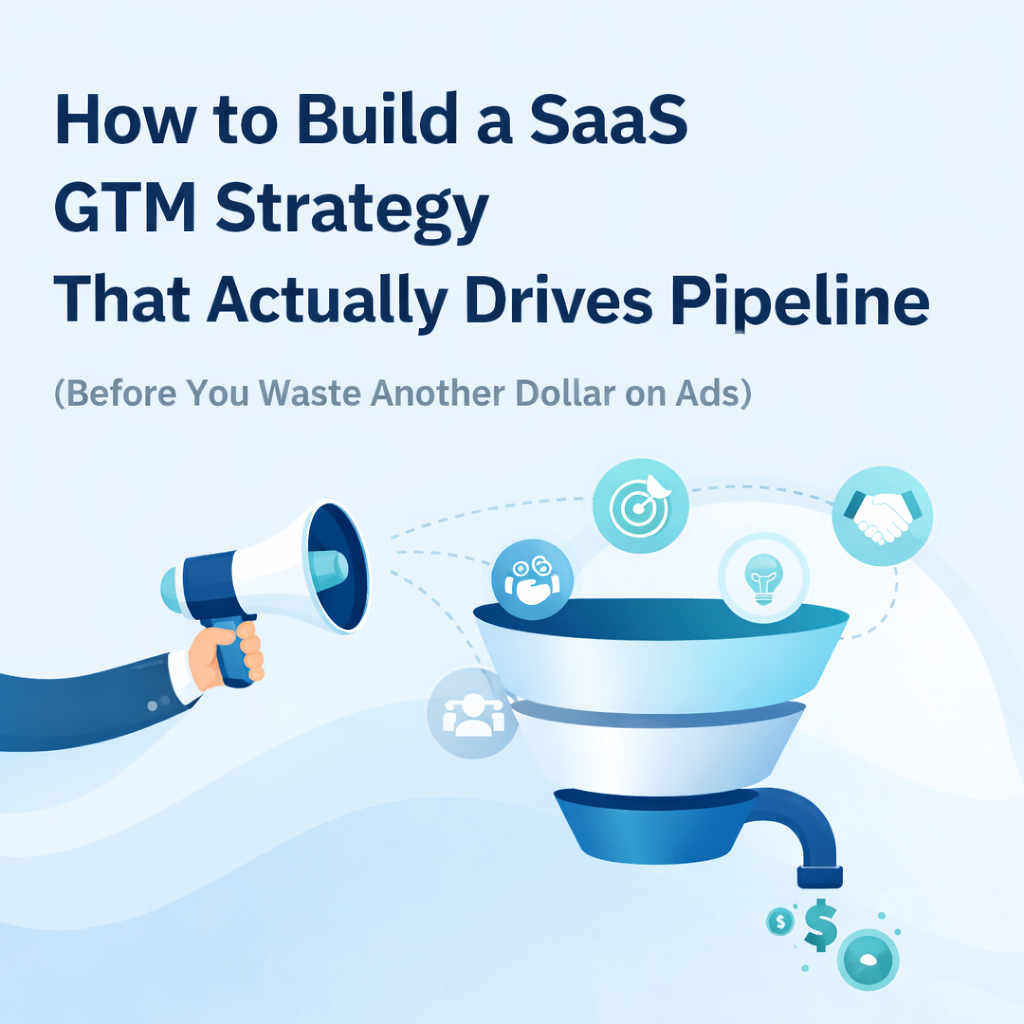
Demand generation focuses on one thing: creating qualified opportunities for sales.
The approach is straightforward. Identify your ideal customer profile. Create content and campaigns that attract them. Capture their information. Nurture them until they're ready to talk to sales. Hand them off.
Demand generation tends to focus on fueling the pipeline, meaning earlier stages like Awareness, Acquisition, and Activation get most of the attention.
This makes sense if you're in growth mode and need to fill the top of the funnel fast. Demand gen excels at creating predictable flow. You know your cost per lead, your lead-to-opportunity conversion rate, and your opportunity-to-close rate.
The math is clean. If you need 10 new customers next quarter and you know your conversion rates, you can work backwards to figure out how many leads you need to generate.
Where demand gen wins:
You have product-market fit and need to scale acquisition. Your sales team can handle volume. You have clear ICP definition. Your buying cycle is relatively straightforward. You need predictable pipeline creation.
Where it struggles:
When you're entering new markets and don't have conversion data yet. When your product requires education before demand exists. When competition is intense and everyone's running the same playbook. When you need to optimize post-sale stages to improve unit economics.
Demand generation treats marketing as a pipeline machine. Feed it budget, get opportunities out. When that's what your business needs, it works.
How Growth Marketing Changes the Game
Growth marketing takes a different view. Instead of focusing primarily on pipeline creation, it looks at the entire customer journey.
That means growth marketers care about activation rates, feature adoption, expansion revenue, churn prevention, and referral generation just as much as lead generation.
The philosophy is simple: revenue doesn't just come from new customers. It comes from getting customers to activate faster, use more features, upgrade to higher tiers, stay longer, and bring in referrals.
Growth marketing takes a holistic view of the entire pipeline, where every stage from Awareness to Referral plays a role in impacting revenue growth.
This approach requires different skills. Growth marketers need to understand product analytics, run experiments across the entire funnel, work closely with product teams, and think in terms of lifetime value rather than just acquisition cost.
Where growth marketing wins:
You're optimizing for capital efficiency and need to improve unit economics. You have high churn and need to fix retention before scaling acquisition. You're in a competitive market where customer experience drives differentiation. You need to unlock expansion revenue. You have product-led growth motion.
Where it struggles:
When you're early stage and don't have enough customers to run meaningful experiments. When your product is sold, not bought, and requires heavy sales involvement. When you need immediate pipeline and can't wait for full-funnel optimization. When your team lacks the cross-functional access to impact post-sale experience.
Growth marketing treats marketing as a growth system. Optimize every stage, compound the gains, scale what works.
The Real Question You Should Be Asking
Most articles would tell you to pick one and go all in. That's not how it works in practice.
The better question is: what does your business actually need right now?
If you're pre-product-market-fit, neither approach will save you. Fix the product first.
If you have product-market-fit but limited pipeline, demand generation gives you the fastest path to predictable opportunity creation. You need volume before you can optimize.
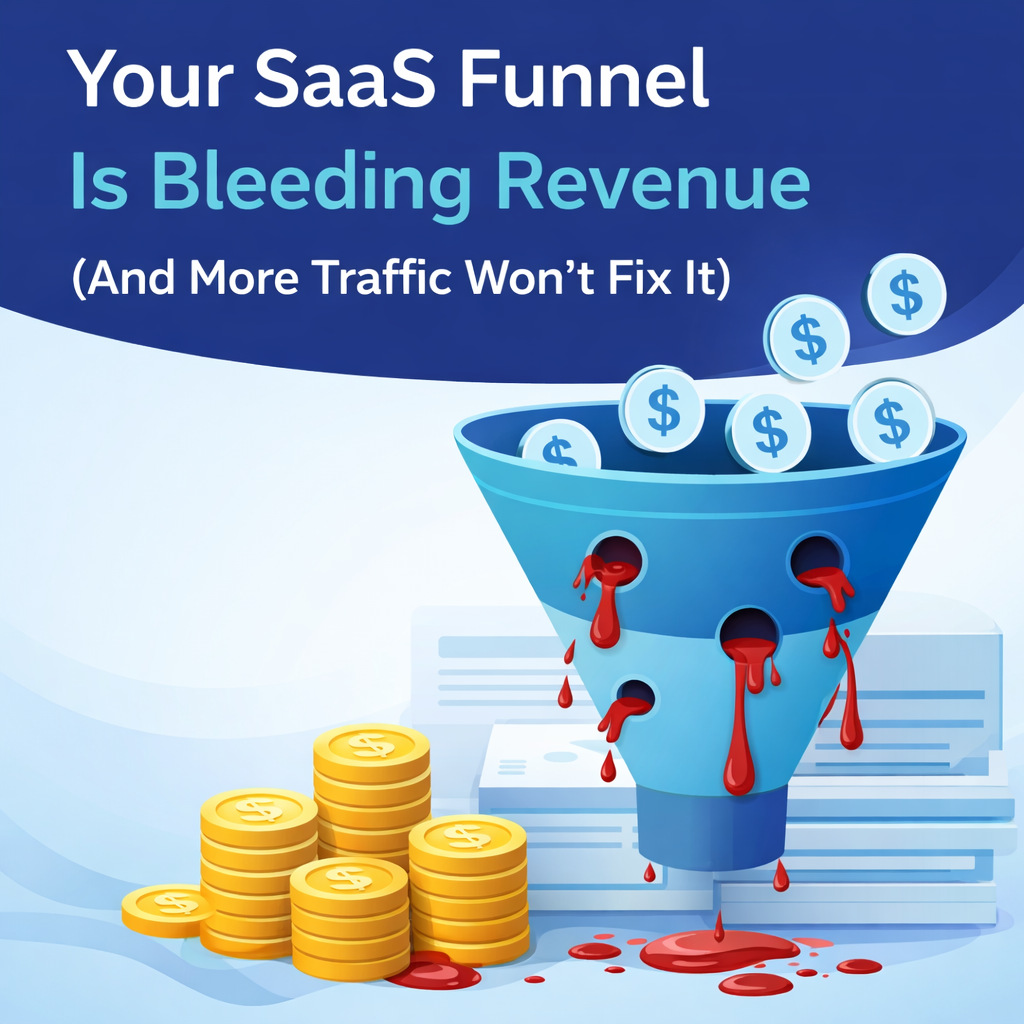
If you have decent pipeline but poor conversion rates, retention problems, or low expansion revenue, growth marketing helps you fix the leaks before you pour more water in the bucket.
If you're scaling and have resources, you probably need both. Demand gen to feed the pipeline, growth marketing to optimize what happens after.
The mistake most teams make is choosing based on what sounds more sophisticated rather than what their business actually needs. Growth marketing sounds sexier. Full-funnel optimization, experimentation, data-driven decisions.
But if you don't have enough customers to run meaningful experiments, you're just doing demand gen badly.
How to Make the Call for Your Team
Start with your current constraints.
Look at your pipeline metrics. Are you generating enough qualified opportunities? If no, you need demand gen focus. If yes, look at conversion rates through each stage.
Check your unit economics. What's your customer acquisition cost relative to lifetime value? If CAC is too high, can you fix it by improving conversion rates and retention, or do you need to find cheaper acquisition channels?
Assess your team's capabilities. Do you have the analytics infrastructure, cross-functional relationships, and technical skills to run growth experiments? Or do you need to build foundational demand gen capabilities first?
Consider your market position. Are you creating a new category where you need to generate demand that doesn't exist yet? Or are you competing in an established market where efficiency and experience drive wins?
Evaluate your timeline. Do you need results this quarter, or can you invest in longer-term optimization that compounds over time?
The honest answer for most SaaS companies is that you need demand generation capabilities as your foundation, with growth marketing practices layered on top as you scale.
You can't optimize a funnel that doesn't have enough volume flowing through it. But once you have volume, optimizing each stage delivers compounding returns.
What This Means for 2026
The marketing landscape is shifting faster than most teams can adapt. AI is changing how buyers research. Intent data is getting more sophisticated. Attribution is getting harder and easier at the same time.
But the fundamentals don't change. You need to generate qualified opportunities. You need to convert them efficiently. You need to retain and expand customers.
The question isn't which methodology wins in 2026. It's which one aligns with where your business is on its growth journey.
If you're building pipeline from scratch, demand generation gives you the structure and predictability you need. If you're optimizing an existing engine, growth marketing gives you the tools to compound your gains.
Most teams will need both. The ratio just depends on your specific constraints.
Making It Work in Practice
Here's what this looks like in execution.
If you're prioritizing demand gen: Build clear ICP definition. Create content that maps to buyer stages. Implement lead scoring that actually predicts opportunity quality. Develop nurture sequences that move prospects forward. Measure cost per opportunity, not just cost per lead.
If you're prioritizing growth marketing: Instrument your entire funnel with analytics. Identify your biggest drop-off points. Run experiments to improve conversion at each stage. Build cross-functional relationships with product and customer success. Measure impact on revenue, not just marketing metrics.
If you're doing both: Start with demand gen to build volume. Layer in growth marketing practices as you identify bottlenecks. Use demand gen to fill the funnel, growth marketing to optimize what happens after. Align your team structure and incentives accordingly.
The teams that win in 2026 won't be the ones who picked the "right" methodology. They'll be the ones who honestly assessed what their business needed and built the capabilities to deliver it.
Your pipeline doesn't care about marketing philosophy. It cares about whether you're generating qualified opportunities and converting them efficiently.
So before you reorganize your team or reallocate your budget, get clear on what problem you're actually solving. Then pick the approach that solves it.
The answer isn't in the methodology. It's in the match between your strategy and your business reality.
About the Author



.svg)
.svg)


.png)









.png)


.png)

.jpg)


.jpg)


