.avif)



You're generating leads. Your pipeline looks healthy on paper. But your sales team is drowning in conversations that go nowhere.
The problem isn't effort. It's not your messaging. It's not even your targeting.
The problem is that you're playing a volume game in an environment built to resist it.
Healthcare Doesn't Move at Marketing Speed
Your average B2B sales cycle runs about 102 days. In healthcare, that number jumps to 125 days—and that's just the average.
If you're selling software into healthcare organizations, you're looking at 8 to 12 months. Some deals take multiple years.
This isn't slow. This is normal.
The delay isn't inefficiency. It's structural. Every healthcare purchase requires security reviews, compliance checks, legal sign-offs, and committee approvals. The decision involves clinical stakeholders, operational leaders, financial gatekeepers, and compliance officers.
The average B2B buying committee includes 6.3 stakeholders. In healthcare, that number climbs higher because the stakes are higher.
Bad decisions in healthcare don't just hurt revenue. They hurt patients.
When you understand that reality, the long sales cycle stops feeling like friction and starts feeling like protection.
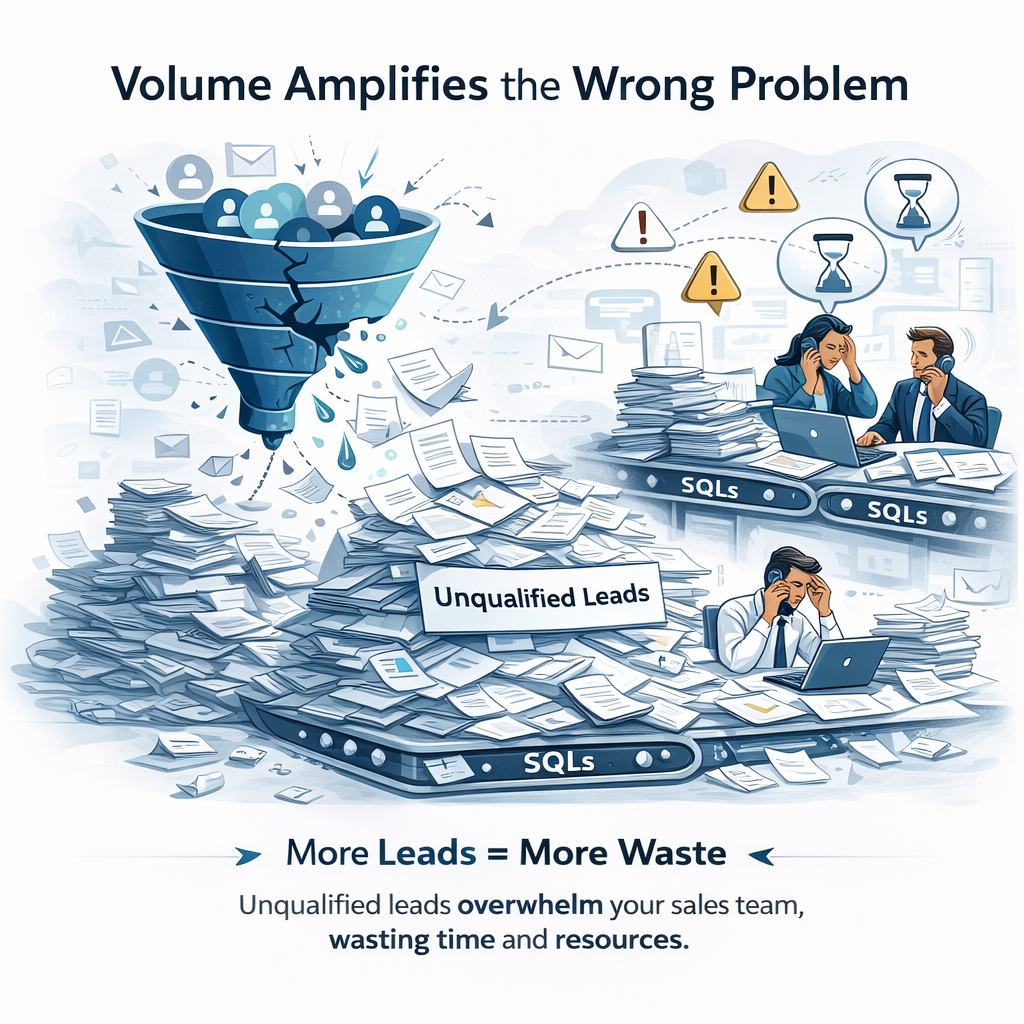
Volume Amplifies the Wrong Problem
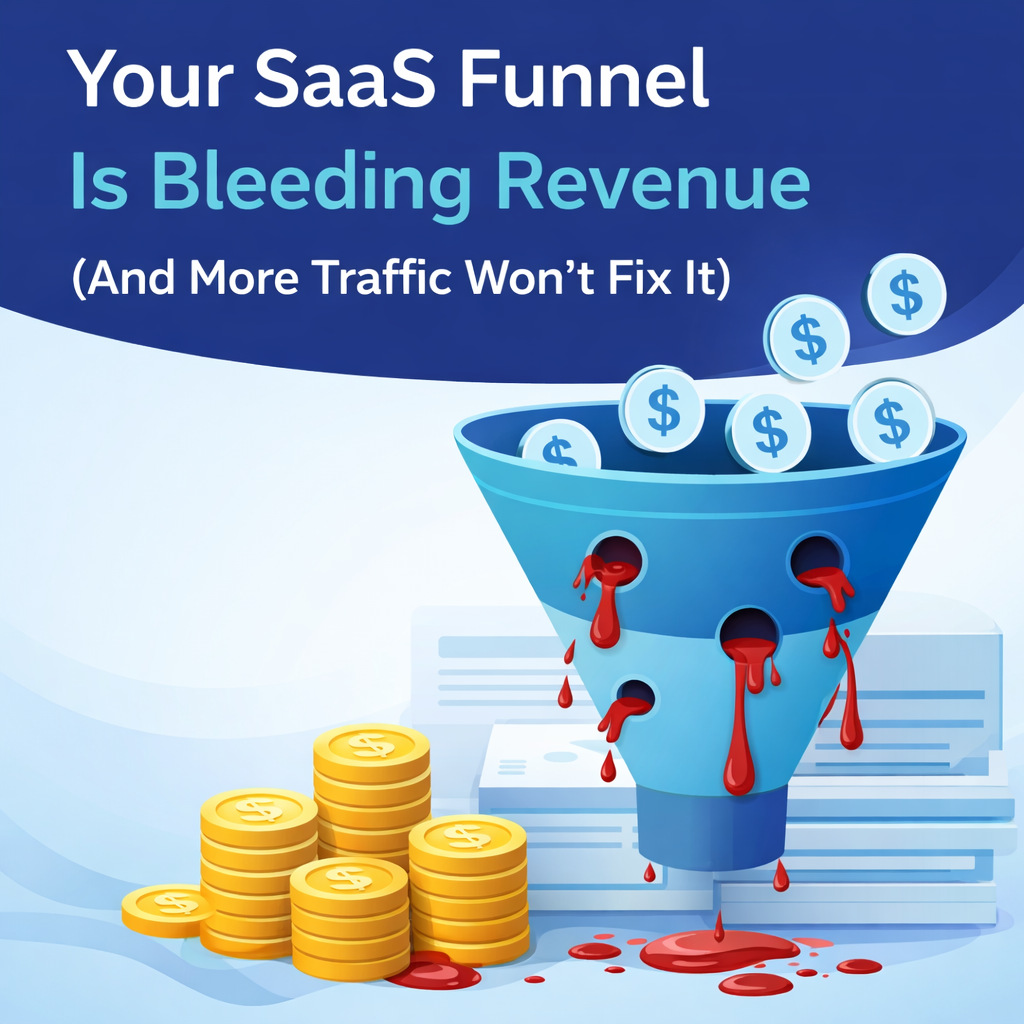
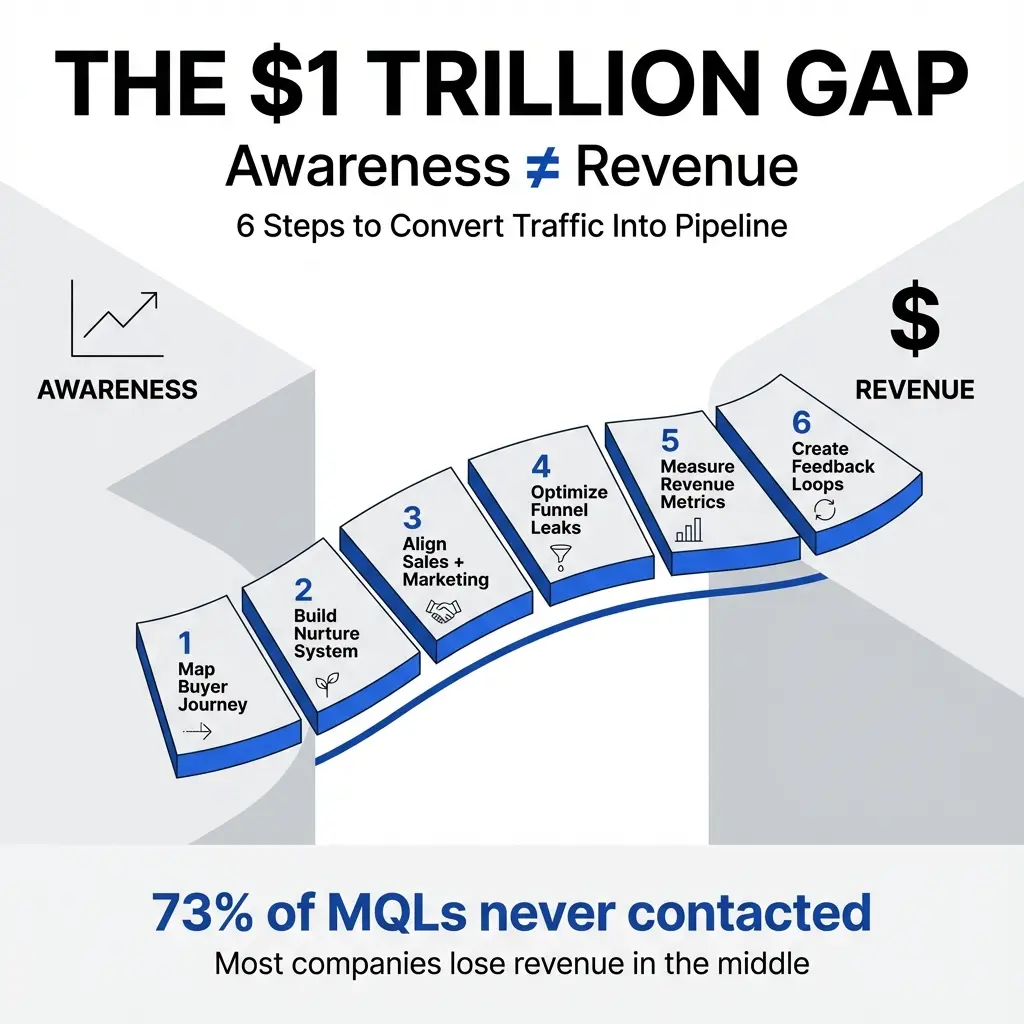
Most B2B funnels lose over 90% of leads before they reach the opportunity stage. The biggest conversion drop happens between MQL and SQL—not at the top of the funnel.
You already know this if you've watched your marketing team celebrate lead volume while your sales team quietly suffocates under follow-up tasks that lead nowhere.
More leads don't solve a qualification problem. They make it worse.
Healthcare conversion rates tell the story clearly. The overall average sits at 3.2%. B2B healthcare software converts at 3-4%. But top performers in healthcare convert up to 21.1%.
That's a 6x difference.
It has nothing to do with lead volume. It has everything to do with qualification, targeting, and fit.
When you generate 1,000 unqualified leads, you're not creating opportunity. You're creating noise. Your sales team spends time sorting instead of selling. Your pipeline looks full but your close rate stays flat.
The cost isn't just wasted time. It's lost trust. Every bad-fit conversation trains your team to distrust marketing's definition of "qualified."
Compliance Constraints Filter Out Generic Tactics
Healthcare operates under regulatory requirements that most marketers avoid entirely. HIPAA violations from marketing mistakes cost real money.
In 2022, two healthcare practices were fined $62,500 and $50,000 respectively for marketing HIPAA violations. Recent research found that 45% of surveyed healthcare organizations find tracking digital member engagements is no longer possible or has become too difficult due to compliance constraints.
This isn't a limitation. It's a forcing function.
Compliance constraints eliminate the shortcuts that work in other industries. You can't retarget the same way. You can't track the same way. You can't message the same way.
The tactics that generate volume in SaaS often violate the rules that govern healthcare marketing.
When you try to force volume-first strategies into a compliance-first environment, you create risk faster than you create revenue.
The Hidden Cost of Poor Data Quality
The biggest challenges in healthcare selling include limited access to decision-makers, long evaluation cycles, multi-stakeholder decision-making, and high sensitivity to operational and clinical risk.
Poor data quality amplifies all of these issues.
When your lead data is wrong, you're not just wasting sales time. You're burning trust with the exact stakeholders you need to reach. You're reinforcing the perception that vendors don't understand healthcare.
Every misaddressed email, every call to the wrong department, every pitch that ignores regulatory context—these aren't minor mistakes. They're signals that you don't belong in the conversation.
Healthcare organizations are cautious by design. They require more validation, involve more stakeholders, and take longer to decide because the consequences of getting it wrong are severe.
When your outreach reflects poor data quality, you're not overcoming caution. You're justifying it.

What Actually Works in Healthcare Lead Generation
Healthcare organizations with systematic momentum management see a 28% reduction in sales cycle length and 35% improvement in deal predictability.
But only when they prioritize qualified leads and structured engagement over volume-based tactics.
The shift isn't complicated. It's disciplined.
Start with fit, not volume. Define what a qualified healthcare lead actually looks like. Not demographics. Not firmographics. Fit. Does this organization have the regulatory environment, operational structure, and decision-making process that aligns with your solution?
Map the committee, not the contact. You're not selling to a person. You're navigating a committee. Understand who needs to say yes, who has veto power, and who influences without deciding. Your outreach needs to reflect that complexity.
Build for the 125-day cycle. Your nurture system needs to sustain engagement across months, not weeks. That means content that educates, not promotes. Touchpoints that add value, not pressure. A process that respects the pace of healthcare decision-making instead of fighting it.
Prioritize compliance from day one. Your tracking, your messaging, your follow-up process—all of it needs to account for healthcare's regulatory environment. Compliance isn't a constraint you work around. It's a filter that improves your targeting.
Measure what matters. Vanity metrics don't convert. Track qualified inquiries, committee engagement, and progression through decision stages. If you're measuring impressions and clicks, you're measuring the wrong thing.
The Real Barrier to Growth in Healthcare
According to Modern Healthcare's annual Digital Health Survey, slow sales cycles remain the biggest barrier to growth for digital health companies.
But the cycle isn't slow because healthcare is inefficient. It's slow because healthcare is careful.
The organizations that succeed in healthcare aren't the ones that generate the most leads. They're the ones that generate the right leads and support them through a process that respects the complexity of healthcare decision-making.
You can't shortcut trust in an industry where bad decisions have life-or-death consequences.
You can't force urgency in an environment where consensus requires six stakeholders and three committees.
You can't win with volume in a market where conversion rates separate top performers from everyone else by 6x.
The path forward isn't more leads. It's better systems.
Systems that qualify before they generate. Systems that educate before they sell. Systems that respect compliance instead of avoiding it.
Healthcare doesn't need more noise. It needs more clarity.
If your pipeline is full but your close rate is flat, the problem isn't at the top of your funnel. It's in how you define qualified, how you support decision-making, and whether your process reflects the reality of healthcare or the fantasy of generic B2B.
The organizations that figure this out don't just grow faster. They grow predictably.
And in healthcare, predictability is worth more than volume ever will be.
About the Author



.svg)
.svg)


.png)









.png)


.png)

.jpg)


.jpg)


