.avif)



You've increased your marketing budget. You're running ads, updating your website, posting on social media. But your census numbers aren't moving the way you expected.
The problem isn't your effort.
Most healthcare organizations treat growth as a marketing problem. You hire an agency, launch campaigns, and wait for the phone to ring. When results plateau, you assume you need more marketing.
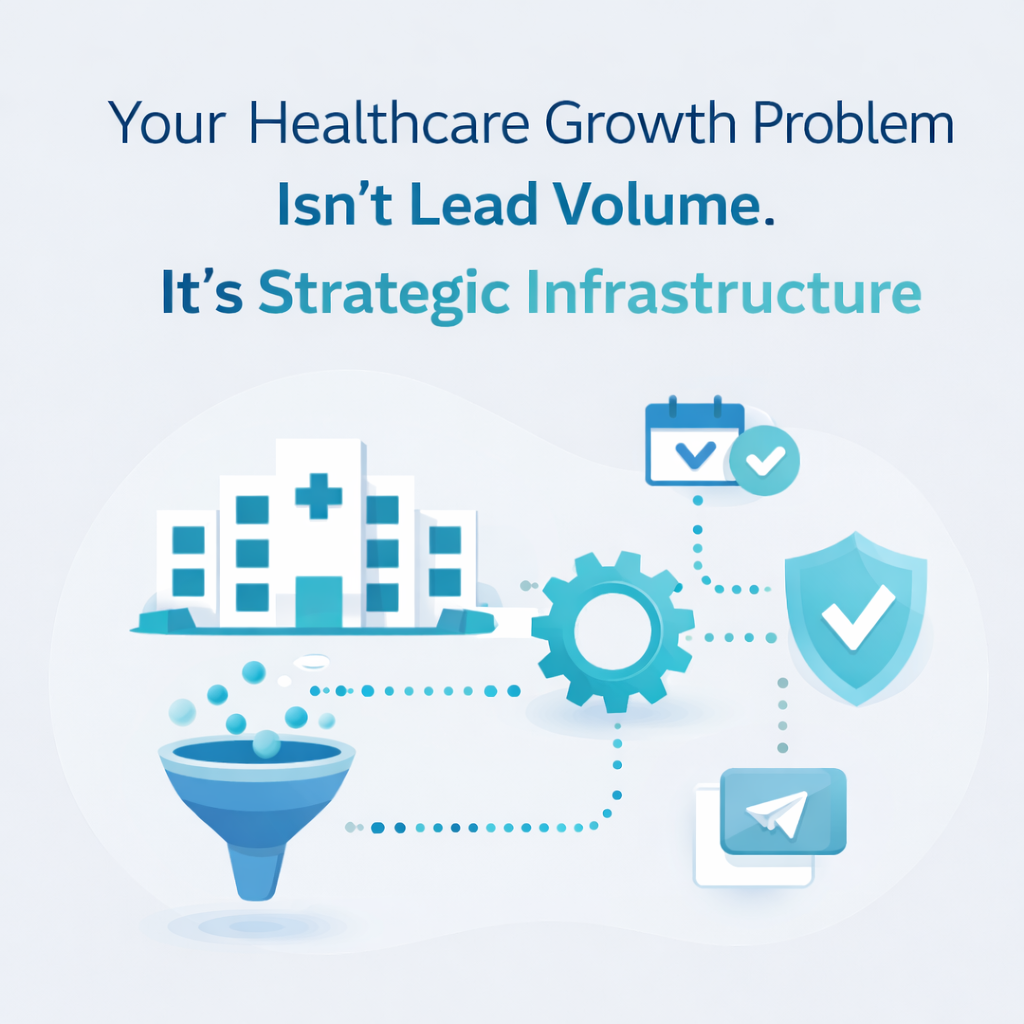
But sustainable growth in healthcare doesn't come from marketing alone. It comes from four connected systems working together: referrals, demand generation, conversion infrastructure, and intake alignment.
When one of these systems breaks down, your entire growth engine stalls. And most organizations don't realize which system is failing until they've already wasted months and budget.

Why Marketing Alone Doesn't Solve Growth
Marketing creates visibility. It drives traffic to your website and generates awareness in your community.
But visibility doesn't equal admissions.
You can have the best-looking website in your market and still struggle with census growth. You can run ads that generate hundreds of clicks and still see minimal inquiries. The gap between marketing activity and actual patient acquisition is where most healthcare organizations lose momentum.
Here's what actually happens in most organizations:
Your marketing generates interest. Someone visits your website or calls your office. But your intake process is slow. Your staff is overwhelmed. Your messaging doesn't address the specific concerns families have when choosing care.
The lead goes cold.
Or your referral relationships are strong, but you have no system for capturing direct inquiries. You're dependent on a handful of referral sources, and when one shifts their pattern, your census drops.
Growth stalls because the systems aren't connected.
The Four Systems That Actually Drive Healthcare Growth
Sustainable healthcare growth requires four systems working together. Missing even one creates a bottleneck that limits your entire operation.
System 1: Referral Infrastructure
Referrals remain critical for most healthcare organizations. But referral relationships alone create dependency and vulnerability.
The healthcare landscape has shifted dramatically. Approximately 47% of physicians are now employed by or affiliated with hospital systems, compared to less than 30% in 2012. Referrals that once flowed freely to independent providers now circulate within system-owned networks.
Even when referrals come through, the execution often breaks down. Research shows that 45% of referred patients fail to attend their appointments. That's not a marketing problem. That's a systems problem.
Manual referral processes create information silos, delays, and referral leakage. You lose potential admissions not because the referral didn't happen, but because the follow-through failed.
A functional referral system requires:
- Clear tracking of referral sources and conversion rates
- Structured follow-up processes that don't depend on memory
- Diversified referral relationships to reduce dependency
- Fast response times when referrals come through
Without these elements, you're building growth on an unstable foundation.
System 2: Demand Generation
Demand generation creates direct patient and family inquiries independent of referral relationships. This is where most organizations think "marketing" lives.
But demand generation in healthcare isn't about traffic. It's about generating qualified inquiries from people who actually need your services and are ready to make decisions.
The economics matter here. Healthcare leads cost an average of $377 to capture. That makes wasted spend costly for small organizations operating on tight budgets.
And budgets are shrinking. Healthcare marketing budgets dropped from 9.6% of total revenue in 2023 to 7.2% in 2024. You have less room for error.
Effective demand generation in healthcare requires:
- Clear messaging that addresses specific family concerns
- Compliance-aware tactics that don't create regulatory risk
- Targeting that reaches decision-makers at the right time
- Content that builds trust before the first call
Generating traffic without these elements just burns budget.
System 3: Conversion Infrastructure
This is where most healthcare organizations quietly lose the most revenue.
Your marketing generates interest. Referrals come through. People visit your website. They call your office.
And then nothing happens.
Healthcare websites convert between 2% and 5%. That means up to 98% of visitors leave without taking action. Medical practices lose up to 90% of potential patients through inefficient lead management.
Even more striking: up to 59% of qualified callers who reach practices never book appointments. More than 25% of calls go completely unanswered.
But top-performing practices achieve conversion rates of 21.1%. That's nearly seven times the industry average. The difference isn't luck. It's system design.
Conversion infrastructure includes:
- Website design that makes next steps obvious
- Clear calls-to-action that match visitor intent
- Phone systems that don't drop calls during busy periods
- Staff training on handling inquiries with urgency and empathy
- Follow-up processes that don't rely on individual memory
You can't fix conversion problems with more marketing. You fix them by improving the systems that turn interest into action.
System 4: Intake Alignment
Intake is where operational reality meets marketing promises. When these don't align, trust breaks down and potential admissions fall through.
Speed matters more than most organizations realize.
Leads contacted within 5 minutes are 21 times more likely to qualify compared to those contacted after 30 minutes. Practices responding within 10 minutes are 70 times more likely to convert leads than those waiting an hour.
Healthcare has the slowest average response time among all industries: 2 hours and 5 minutes. The average response time across all leads stretches to 47 hours.
By that point, the family has already scheduled with a competitor.
Intake alignment means:
- Response protocols that prioritize speed without sacrificing quality
- Staff capacity to handle inquiry volume during peak times
- Clear handoffs between marketing, intake, and clinical teams
- Messaging consistency from first contact through admission
When your intake process can't handle the leads your marketing generates, you're wasting money on both sides.

How to Diagnose Which System Is Broken
Most healthcare organizations know growth has stalled. They don't know which system is causing the problem.
Here's how to identify where your bottleneck lives.
If Your Referrals Are Declining:
Look at referral source diversity. If you depend on three or fewer primary sources, you're vulnerable. Track conversion rates by referral source. If referrals are coming in but not converting to admissions, your follow-up process is broken.
If You're Getting Traffic But No Inquiries:
Your demand generation messaging isn't connecting. Families are visiting your website but not finding what they need to take the next step. Review your website conversion rate. If it's below 5%, your conversion infrastructure needs work.
If You're Getting Calls But No Admissions:
Your intake process is the problem. Track how long it takes to respond to inquiries. Measure how many calls go to voicemail. Record call quality to identify where conversations break down.
If Everything Looks Good But Census Isn't Growing:
Your systems aren't connected. Marketing, referrals, intake, and operations are working in silos. You need alignment across the entire patient journey.
Building Growth Systems That Work Together
Fixing one system in isolation doesn't solve the problem. Growth happens when all four systems support each other.
Start by mapping your current patient acquisition process from first contact to admission. Identify where leads drop off. Measure response times, conversion rates, and referral patterns.
Then prioritize based on impact.
If your intake process can't handle current volume, fixing that before increasing marketing spend prevents wasted budget. If your referral relationships are strong but you have no direct demand generation, diversifying your lead sources reduces dependency risk.
The goal isn't perfection. It's connection.
Your referral system should feed into your intake process. Your demand generation should align with your conversion infrastructure. Your intake team should understand what your marketing promises.
When these systems work together, growth becomes predictable instead of random.
What This Means for Your Organization
You don't need more marketing. You need connected systems.
Most healthcare organizations treat growth as a series of separate problems: referrals, marketing, intake, operations. They hire different people to solve each problem and wonder why results stay flat.
Sustainable growth comes from treating these as parts of one system.
That means your marketing team needs to understand intake capacity. Your intake team needs to know what your marketing promises. Your referral relationships need to connect to your demand generation strategy.
The organizations that grow consistently aren't spending more. They're building systems that work together.
If your census has plateaued despite increased marketing effort, the problem isn't your budget. It's your systems. And systems can be fixed.
Start by identifying which system is creating your bottleneck. Then build the infrastructure to support sustainable growth.
Growth without systems is expensive and unpredictable. Growth with systems is sustainable and scalable.
That's the difference between activity and outcomes.
About the Author



.svg)
.svg)


.png)












.png)


.png)

.jpg)


.jpg)


